King Variations: Eastern vs California
The term "King" masks a substantial architectural divergence. Homeowners routinely assume a California King is simply larger in every dimension than a standard King. In reality, a California King is narrower and longer, sacrificing 4 inches of transverse width to gain 4 inches of longitudinal stretch.
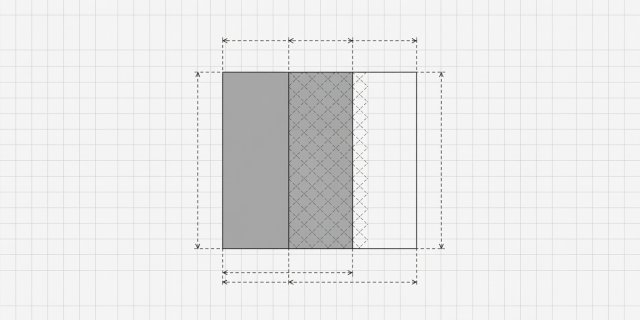
The Mathematical & Spatial Variance
Understanding this trade-off is critical for coordinating with existing room geometry and human physiology:
| Specification | Standard (Eastern) King | California King |
|---|---|---|
| Width | 76 Inches (193.0 cm) | 72 Inches (183.0 cm) |
| Length | 80 Inches (203.0 cm) | 84 Inches (213.5 cm) |
| Surface Area | 6,080 sq in (42.2 sq ft) | 6,048 sq in (42.0 sq ft) |
| Equivalent Setup | Two Twin XL mattresses pushed together | Custom elongated profile |
| Target Sleeper Height | Up to 6'2" (188 cm) | Over 6'2" (188 cm to 6'8"+) |
| Favorable Room Shape | Wide, square master suites (12'×12'+) | Deep, rectangular bedrooms (11'×14'+) |
Biomechanical Threshold: When Do You Truly Need 84 Inches?
The decision between these two giants hinges on occupant height and sleep posture. Stomach sleepers naturally point their toes downward (plantar flexion), extending their overall body length by 4 to 6 inches beyond their standing height. Similarly, back sleepers who favor thick contouring pillows lose the top 12 inches of headboard space.
For anyone standing 6'3" (190 cm) or taller, an 80-inch Eastern King often forces either knee flexion or bare feet slipping out into chilly drafts. The California King provides 84 inches of uninterrupted longitudinal span, restoring natural spinal extension throughout deep sleep phases.
Room Proportions & Walking Clearances
Because an Eastern King demands 76 inches of horizontal width, your headboard wall must be substantial. With standard 28-inch architectural nightstands on each side, your required minimum wall span is:
76" (Bed) + 28" (Left Table) + 28" (Right Table) + 6" (Margin Buffer) = 138 Inches (11.5 Feet)
If your master bedroom width is under 12 feet, an Eastern King will crowd right up against wall corners, blocking electrical receptacles and making sheet changes an exhausting physical chore. Conversely, in a long and narrow room (such as a 11' × 15' master addition), a California King's 72-inch width preserves precious side walkways while utilizing surplus length effortlessly.
Staircase Turns & Historic Home Bottlenecks
Before ordering an Eastern King, measure every doorway, stair landing, and low bulkhead ceiling along the transit route. An Eastern King box spring cannot flex around a 90-degree stair landing. Manufacturers overcome this by shipping standard Kings with two Twin XL split box springs.
However, if you purchase an ultra-firm traditional continuous-wire innerspring mattress that cannot be bent, and your access staircase features a 72-inch ceiling rake with a tight turn, that mattress will never enter your bedroom. Measure transit geometry before delivery to avoid costly freight return penalties.
Split King vs California King
If you and your partner have divergent firmness preferences or use independent motorized articulated bases, the Standard Eastern King is undeniably superior. Dual Twin XL mattresses form an Eastern King seamlessly with readily available off-the-shelf split-sheet sets. Split California Kings are rare, difficult to source, and considerably more expensive.
Need advice on other room constraints? Explore our Spatial Clearance Rules or read our common questions in the Bedframe Realities FAQ.